

Do Birds Feel Love?

Greetings, fellow bird lovers and art enthusiasts,
Recently, I reconnected with an old family friend, and I asked about her parrot that she had when we were kids. Well, obviously, that particular one is no longer with us, but she has another one who is almost 30 years old now and who virtually never leaves her side, a lot like my cat.
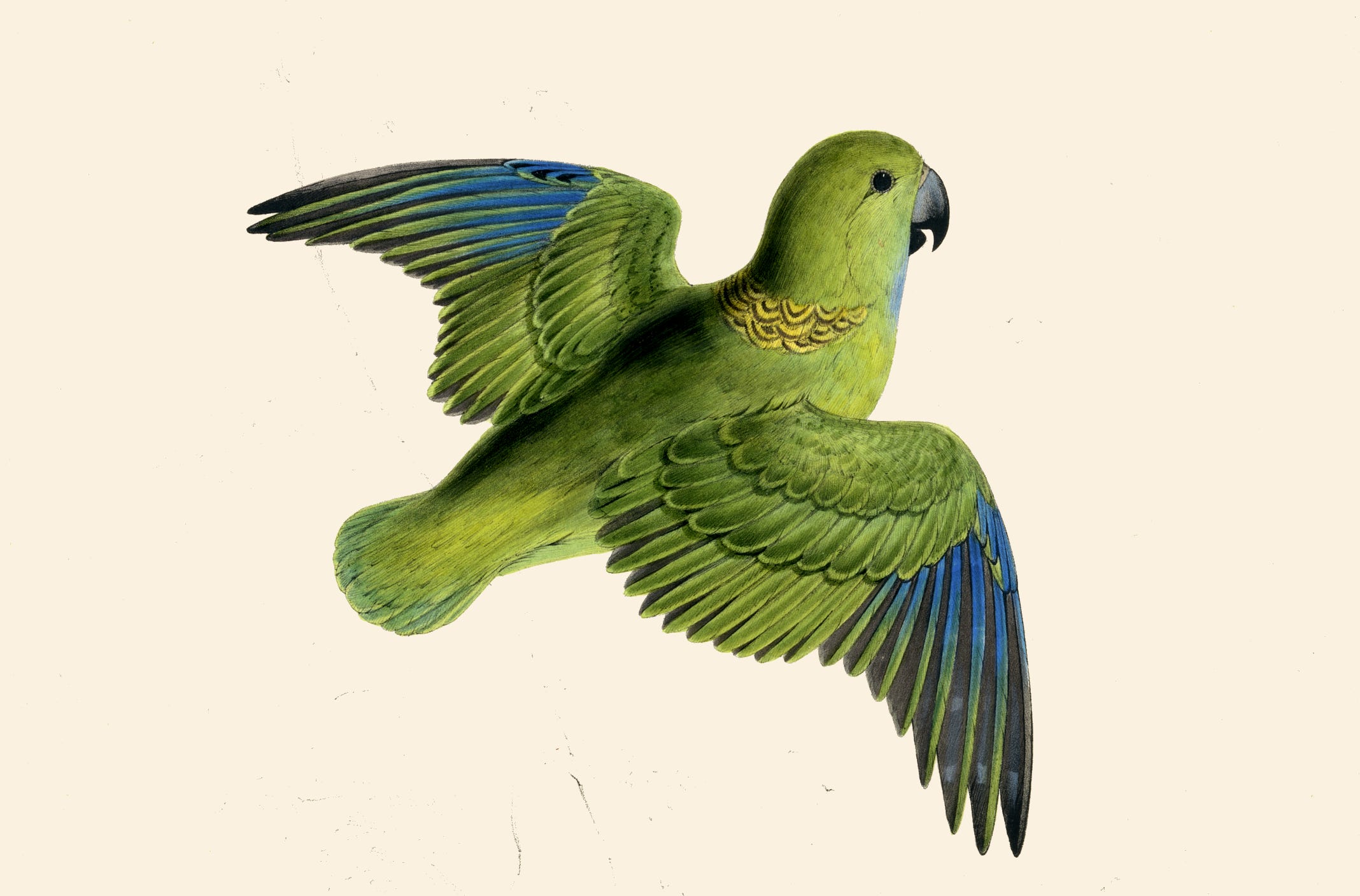
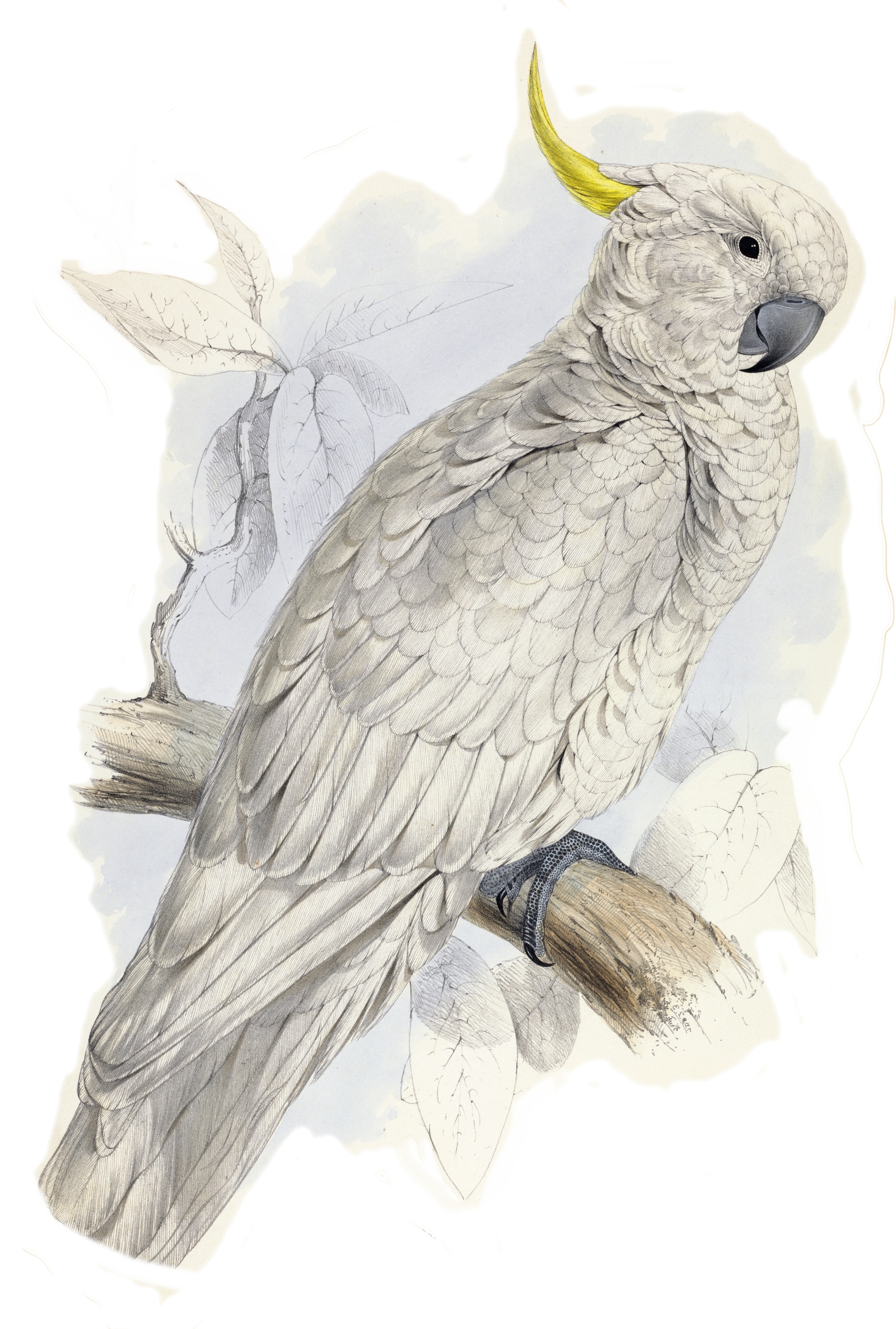
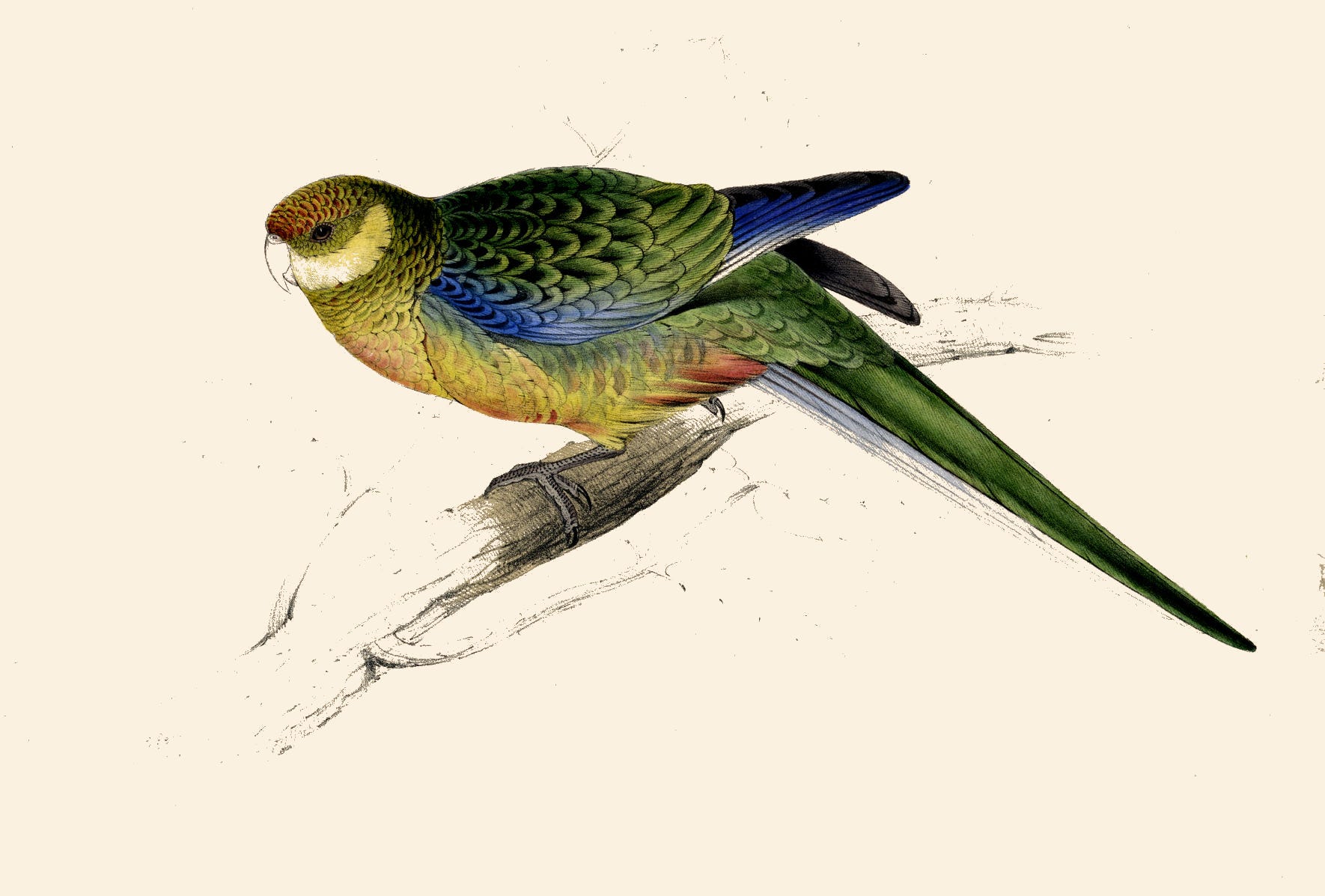
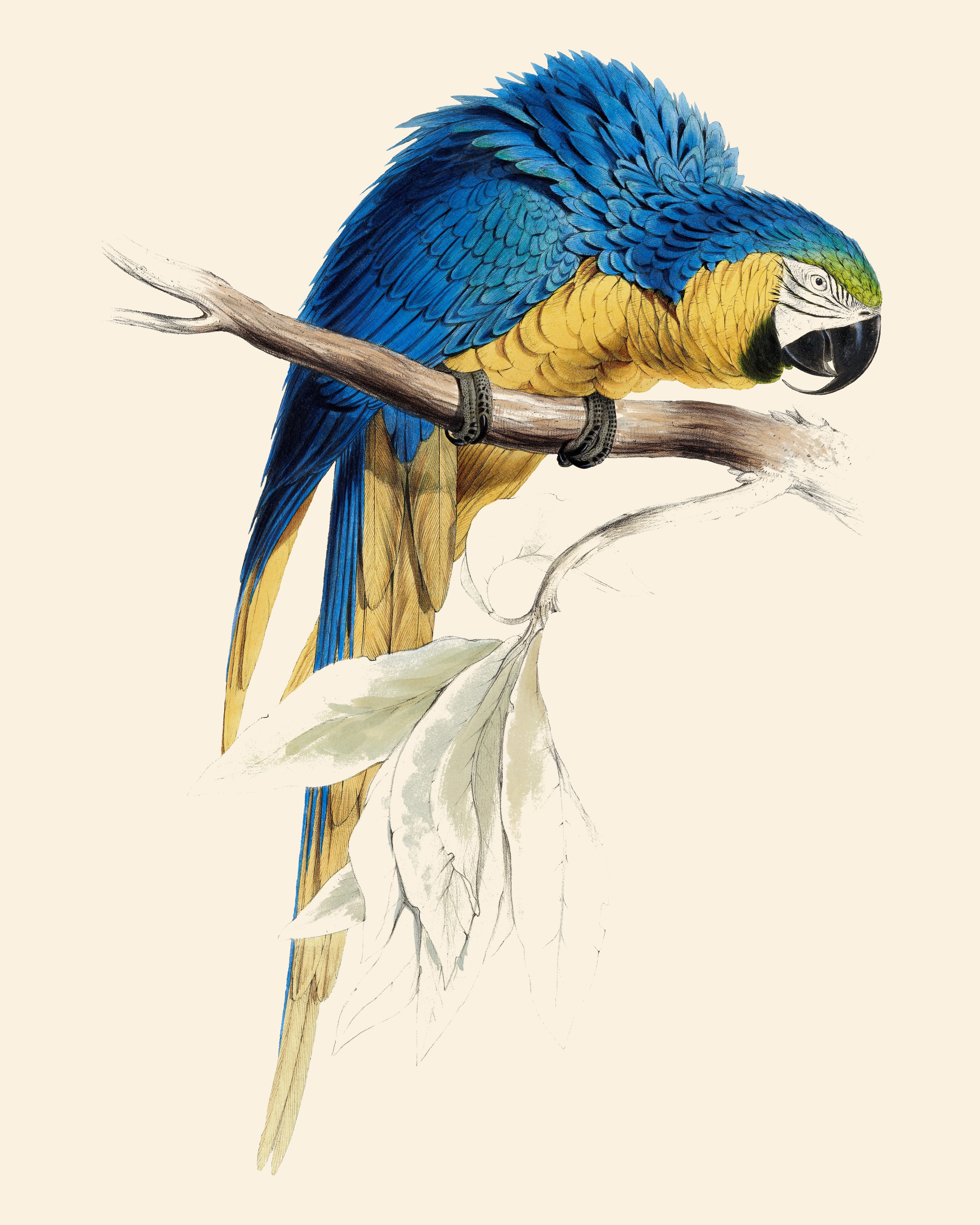
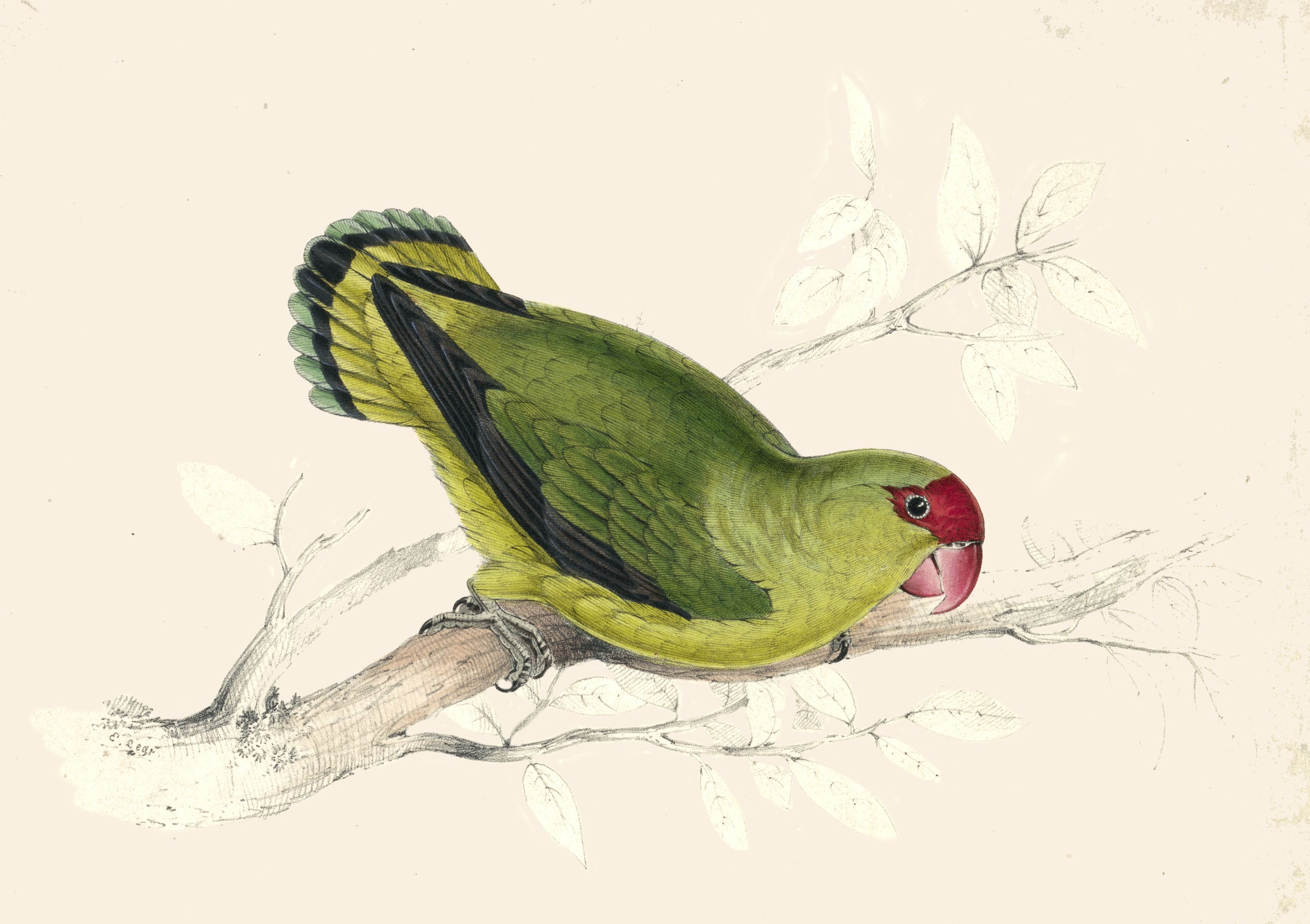
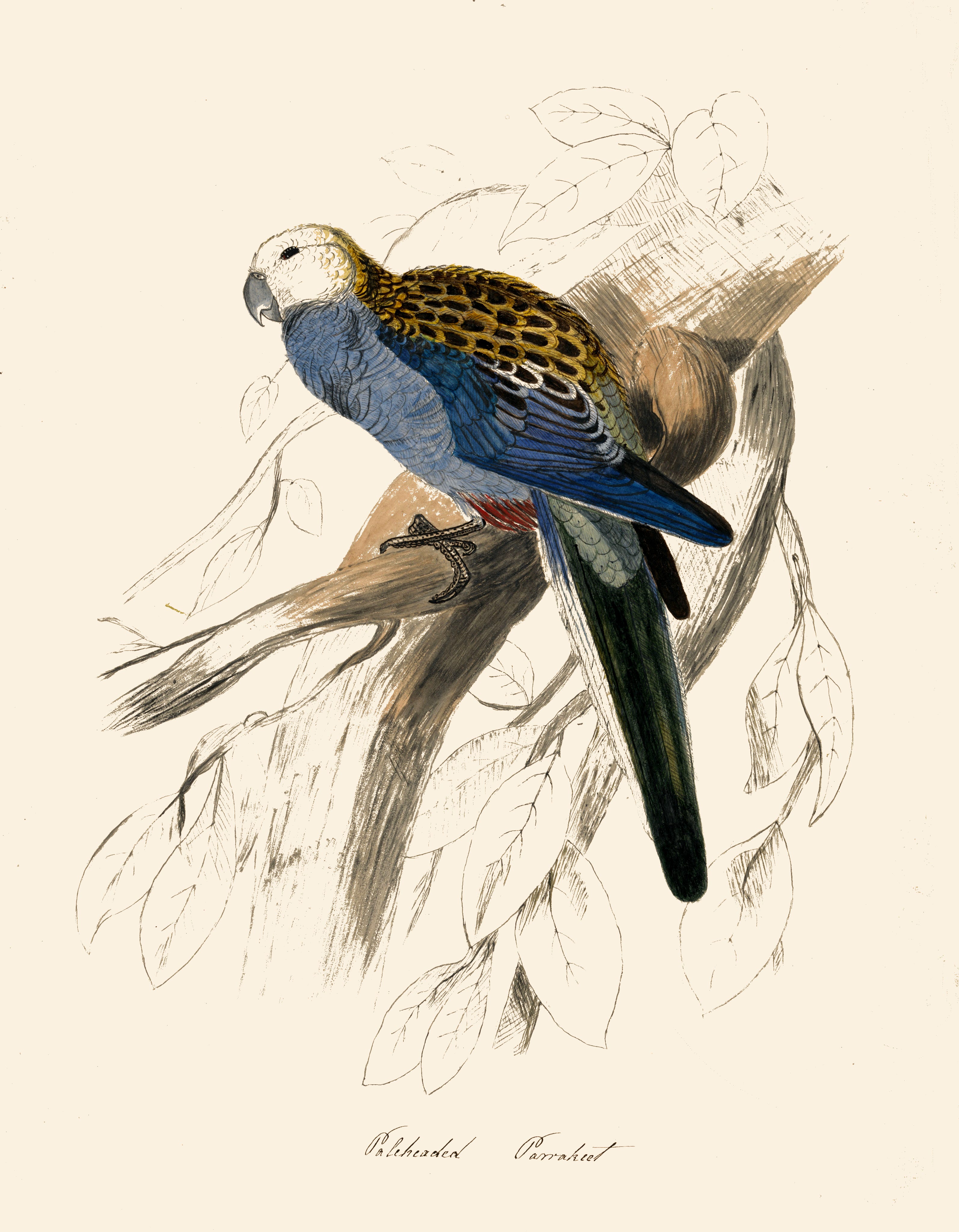
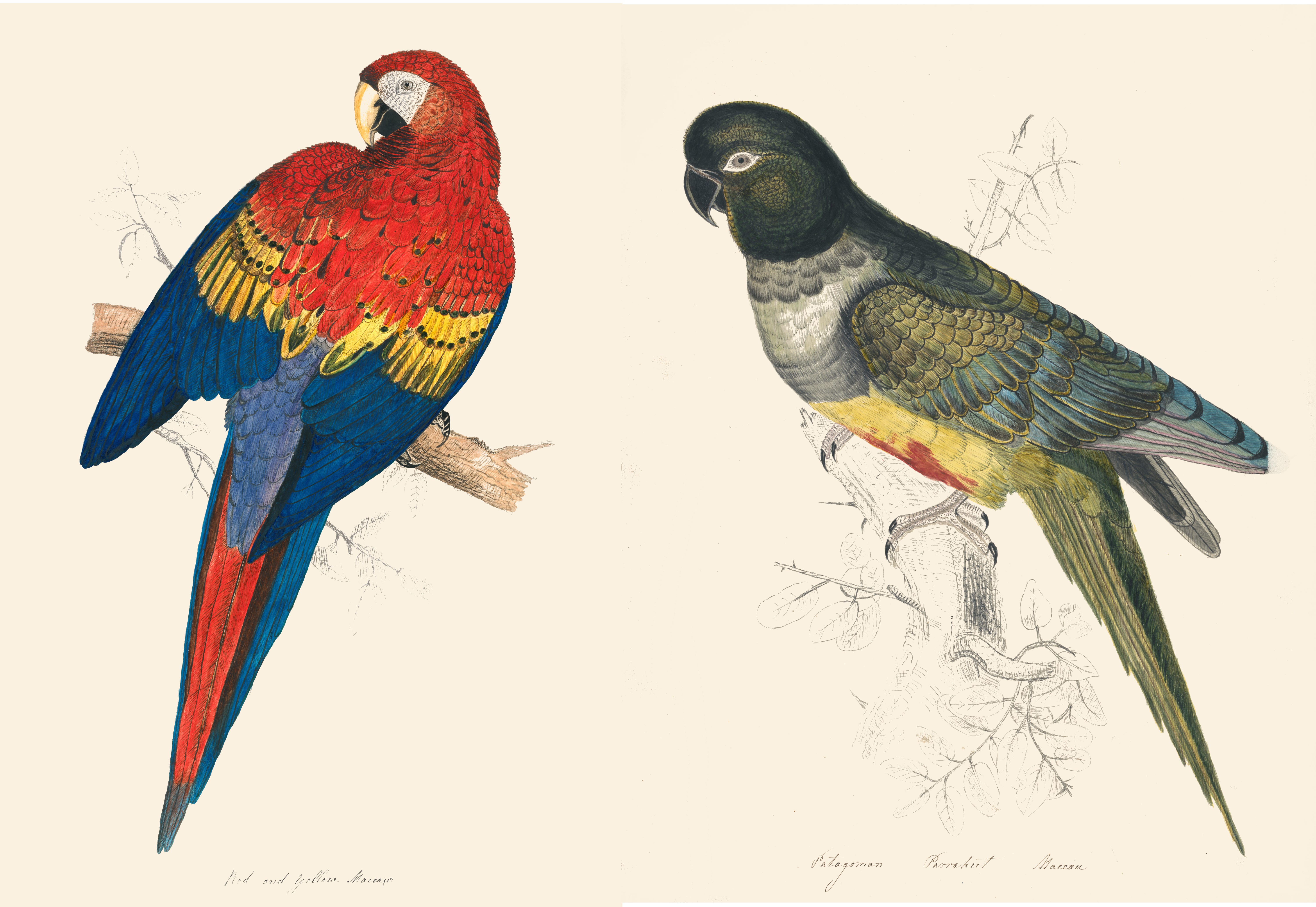
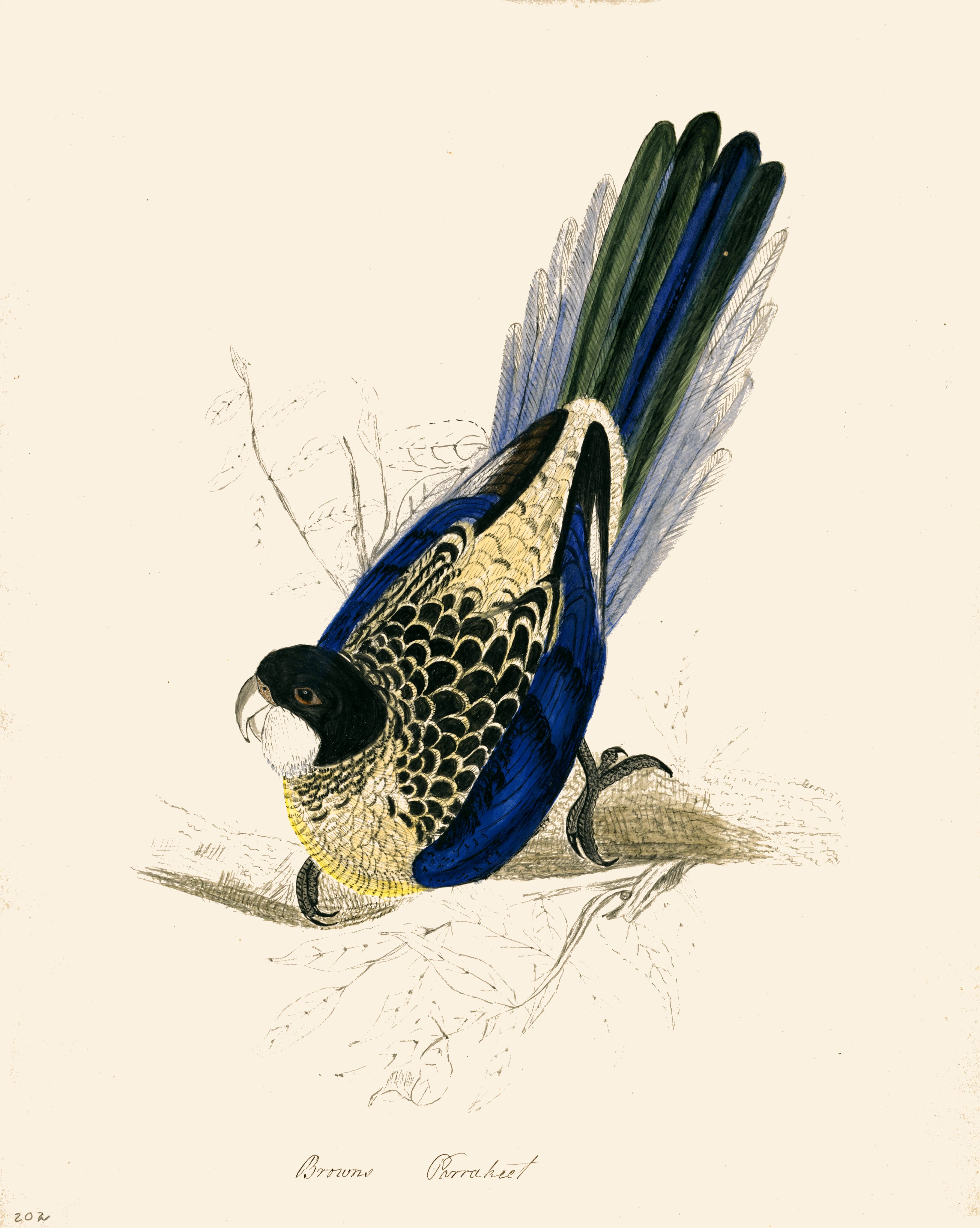
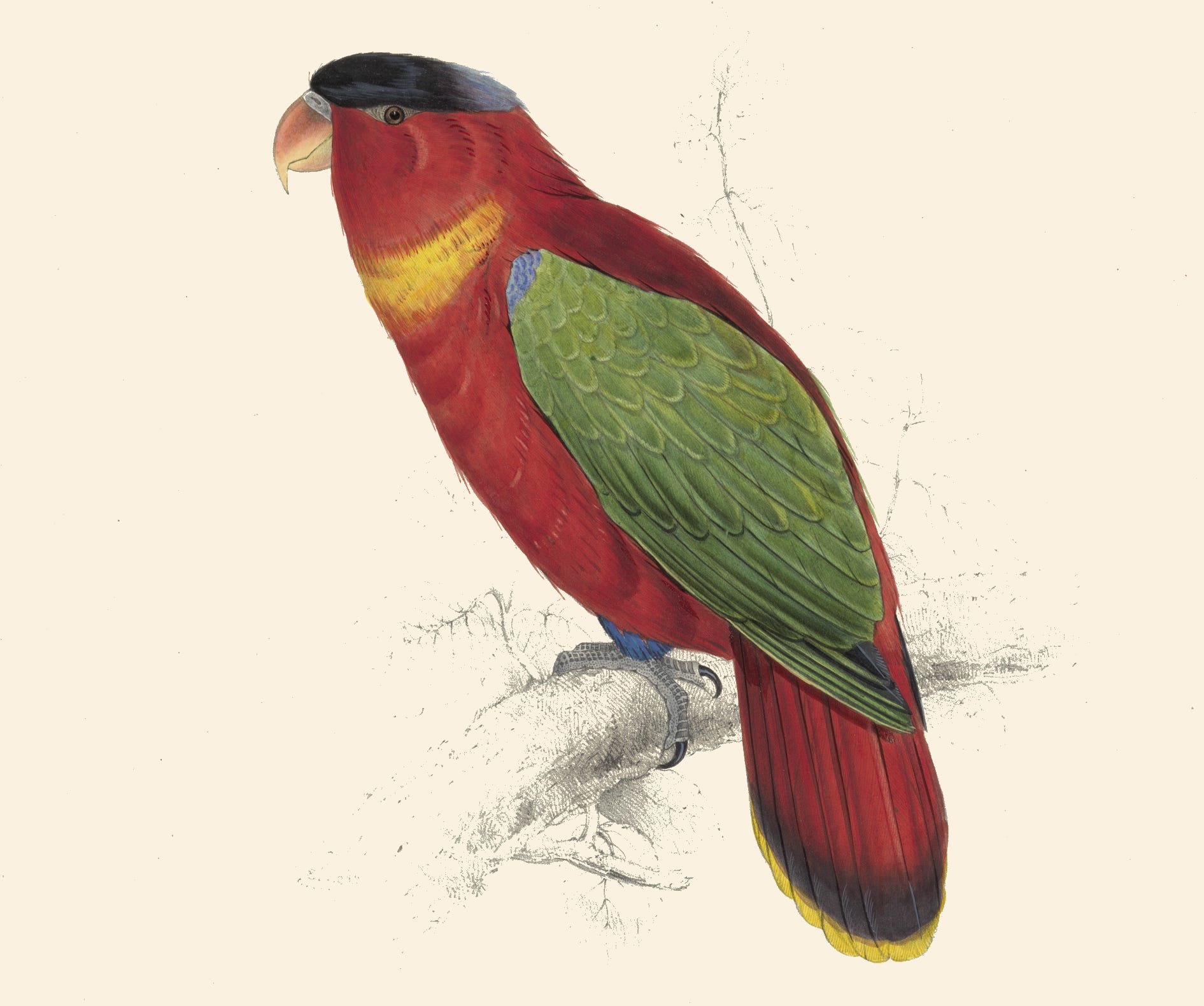
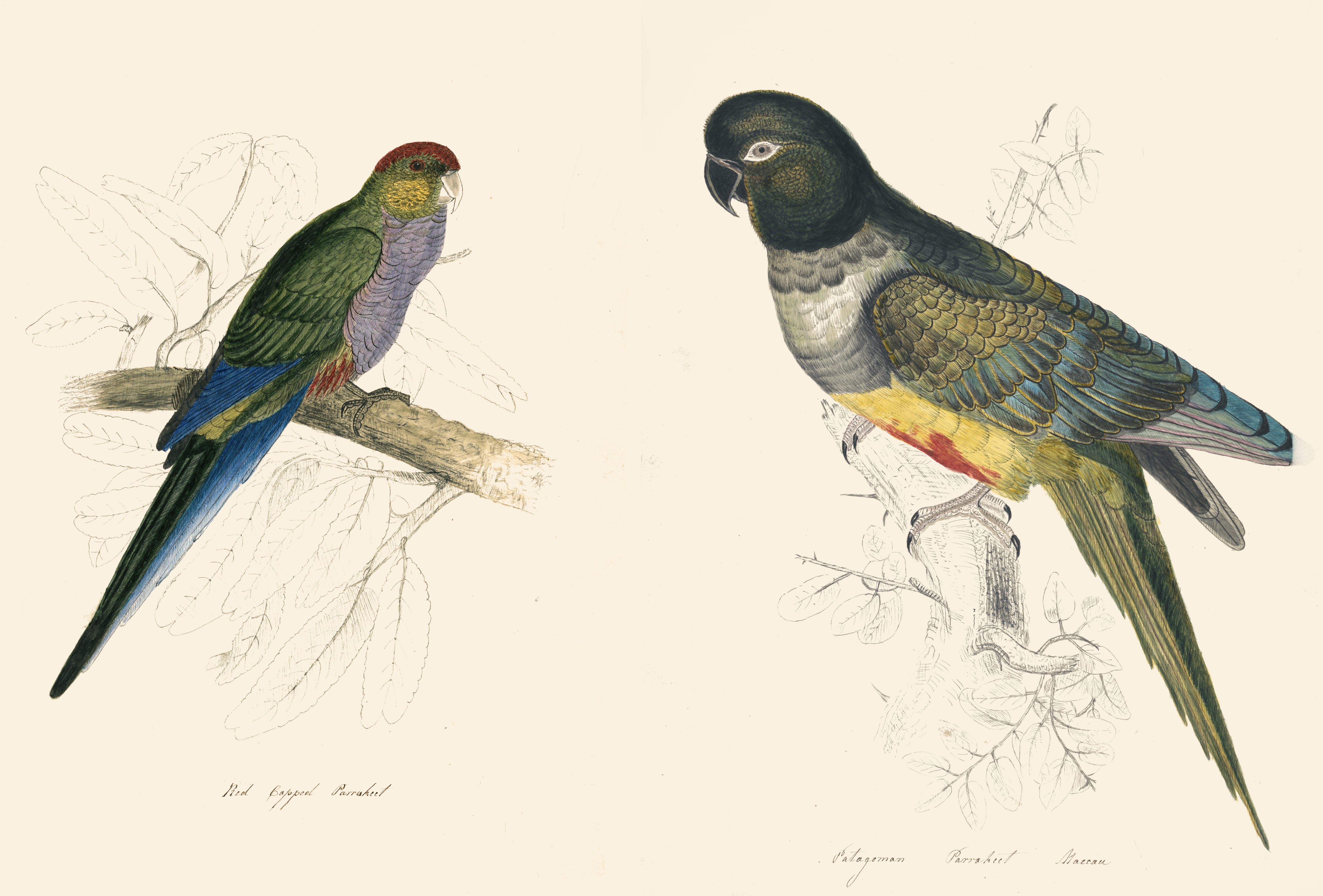
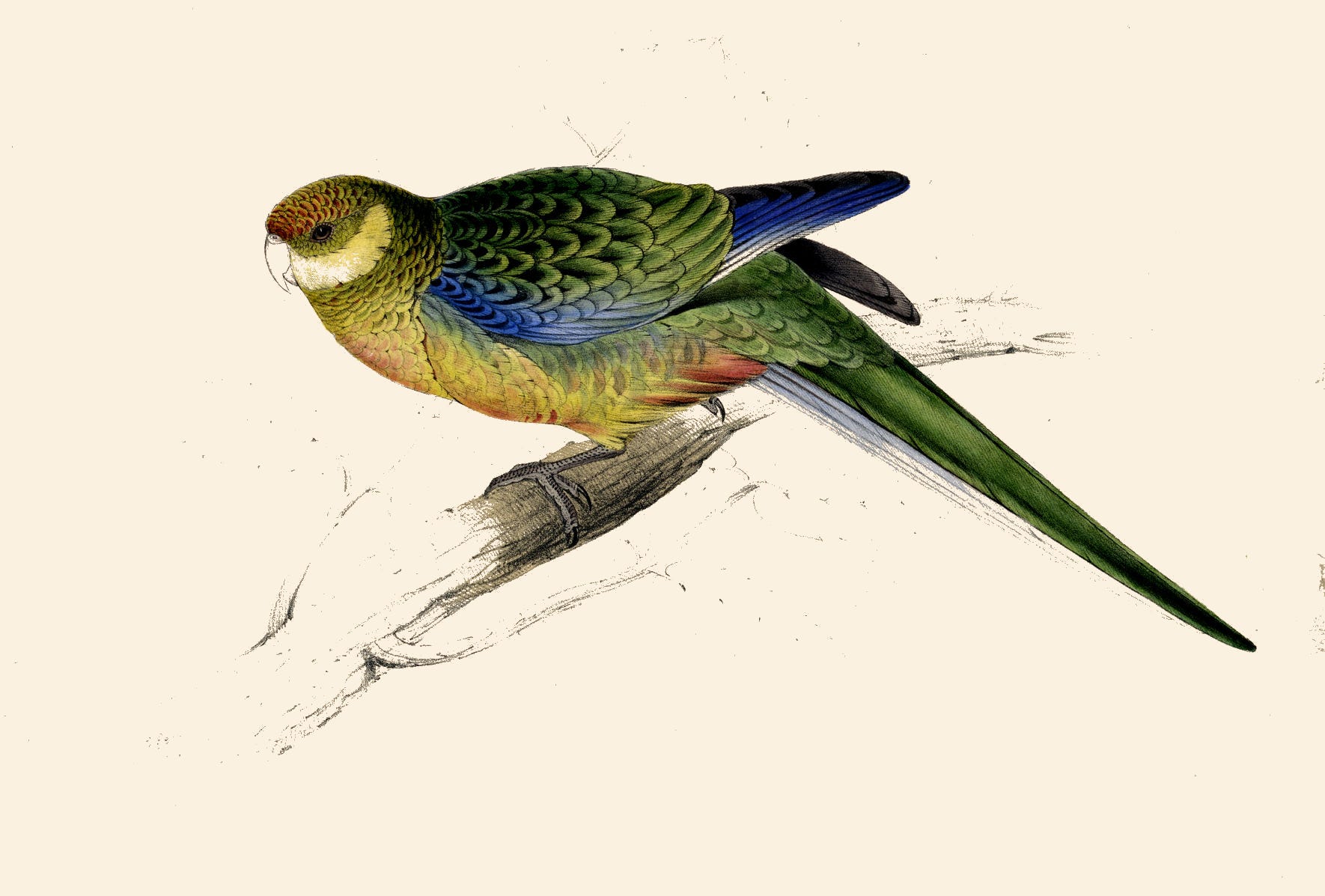
Well, that got me wondering if birds feel love or any emotions at all, so I did some research about it. But before I share with you what I found, I want to mention that today’s newsletter also features parrot paintings by Edward Lear, which we have already talked about. I thought it was an appropriate decision, considering a parrot was what got me on this subject in the first place.
Remember that Edward Lear did these paintings, and many others, before he was eighteen, using the lithographic technique he had taught himself. He had no money to pay for text pages, so only the parrot plates were printed. I hope you enjoy them.
Is love a feeling that birds can experience?
The scientific community remains divided on this question, with some adamantly saying no, while others confidently assert that birds are indeed capable of love. The debate rages on, fueled by the collection of intriguing facts and evidence in an attempt to discredit the opposing view.
There are plenty of reasons to consider the possibility that birds can feel love. For starters, a whopping 90 percent of birds are monogamous. Although some recent genetic studies have revealed instances of birdie cheating, overall, birds seem to have us humans beat when it comes to sticking with their partners.
They're more likely to stay committed in their relationships, demonstrating a remarkable level of fidelity.
On top of the scientific arguments, there is a wealth of anecdotal evidence that supports the belief that birds are capable of love.
Take albatrosses, for example. These majestic creatures mate for life, and if one partner passes away, the surviving bird will wait one or two years before seeking a new mate. From a strictly natural selection perspective, this behavior seems puzzling.
Wouldn't it be more advantageous for the lone albatross to find a new partner immediately and increase their chances of passing on their genetics? Yet, they choose to remain alone for a year or two, which strongly suggests the presence of emotions like grief and possibly even love.
Furthermore, there are heart-wrenching accounts of geese who have starved themselves to death after the loss of a lifelong companion. Such extreme actions point towards feelings of deep grief, if not love.
And how can we dismiss the occurrences where healthy birds choose to stay faithfully by the side of a sick or dying mate, even going as far as bringing them food in hopes of nursing them back to health? Logically speaking, it would seem more advantageous for these birds to seek out a new, healthy mate instead.
These remarkable behaviors beg the question: Could it be that birds are driven by emotions as profound as love?
In addition to these anecdotes, there are certain bird species that are known for their affectionate behavior toward their mates, something that has led to endearing terms like “Love Birds” and “Lovey-Dovey.”
Some birds engage in physical gestures of affection that strengthen their bond, even though such displays may not directly contribute to their reproductive success. This raises the question: Why do they invest energy in these acts of love?
For one researcher, it was the documented observations of affection in pigeons and doves that truly convinced him of the existence of love in birds.
These birds exhibited a range of behaviors; some highly affectionate pairs couldn't seem to keep their beaks off each other; couples that seemed to want to be in close proximity but without direct interaction; and even pairs that merely tolerated each other's presence.
If public displays of affection in doves were solely a result of programmed instinctual responses, wouldn't we expect less variability in their behavior?
Despite the compelling anecdotal evidence, there is no scientific agreement about whether or not birds have feelings, but people who own birds often see evidence of bird emotions in their different personalities and behaviors.
Birds do not communicate emotions directly, and though behavioral clues can be ambiguous, they do seem to demonstrate a wide range of emotions to observant birders.
Pet Birds and Emotions
Unlike birders, pet bird owners have a rare chance to form strong connections with their feathered companions, which allows them to truly understand their pets' various moods and emotions.
From feelings of stress and loneliness to moments of pure joy and excitement, these owners become intimately acquainted with the emotional range of their birds. As a result, most pet bird owners have no doubt that their birds possess the capacity to experience emotions.
Conversely, backyard birdwatchers do not have the same level of personal interaction with wild birds, so they may find it more challenging to perceive the depth of emotions in these creatures.
Nevertheless, it’s not impossible, but it requires attentive observation and patience to discern the subtle indications of feelings displayed by wild birds.
How Wild Birds Show Emotions
Birds may or may not have feelings and emotions, and it is probably impossible for us to ever know for sure. But they do exhibit emotion-like behavior that can provide fascinating insights into how birds act.
Birders who carefully observe every bird they see can read emotional clues to learn even more about birds' lives.
Emotion vs. Instinct
The concept of bird emotions is not clear-cut; there are ongoing discussions on whether certain behaviors that appear emotional are genuine expressions or merely instinctual actions.
Take, for instance, a pair of birds engaging in courtship behavior. It is possible that there might not be an emotional connection between them, but rather a drive to select the most suitable partner to ensure the production of robust and healthy offspring.
But then, how do you explain the fact that birds who are mated for life often go through the mating ritual year after year?
Whether birds really feel emotion, or whether we just put our human feelings on them we may never know. But here are some behaviors that might possibly point to actual bird emotions.
Love and affection: Delicate acts of courtship, such as mutual preening and food-sharing, serve as visible evidence of a deep connection between mated birds, akin to expressions of love. Similarly, parent birds exhibit remarkable care and tenderness toward their hatchlings, mirroring the display of parental love.
Although these emotions may not extend beyond a single breeding season or brood, they can establish profound bonds. Birds that form lifelong partnerships demonstrate affection in various ways, just like human companions, by providing constant companionship throughout the year. Devoted mates may safeguard each other, share food resources, and engage in other gestures to manifest their deep affection and concern.
Fear and tension: When birds experience fear, their behaviors are evident indications of their state. The most prevalent response to fear is rapid flight and seeking safety, mirroring the fight-or-flight response seen in humans.
Other signs of fear include freezing in place, crouching, heightened respiration rate, dilated eyes, and emitting alarm or distress calls. These behaviors closely resemble human responses to fear, such as immobility, increased heart rate, and vocal screams of terror.
Parent birds may also exhibit fear on behalf of their offspring, employing various distraction displays or other strategies to divert predators' attention away from vulnerable chicks.
Anger and rage: Among the array of emotions observed in birds, anger prominently stands out. Angry bird behavior is often characterized by menacing postures, hissing sounds, and intimidating displays, and it can escalate to lunges, wing slaps, bites, and other forms of aggression.
When in flight, angry birds may engage in dive attacks toward intruders or competitors, sometimes resulting in collisions or chasing them away from the vicinity.
This type of behavior is commonly witnessed by backyard bird enthusiasts, particularly around feeders. Birds can also exhibit anger in various other circumstances.
Grief and sadness: Grief is a multifaceted emotion, and just as humans display varying reactions when grieving, birds also exhibit diverse responses. It may not always be immediately apparent that a bird is experiencing grief, as their behavior might initially appear unchanged.
Similar to humans in the denial stage of grief, a grieving bird may show signs of shutting down. However, there are instances where birds have been observed actively searching for a lost mate or chick, indicating their grief.
Listless behaviors and drooping postures are common indications of grieving birds. Some grieving birds may emit plaintive cries, possibly in the hopes of receiving a response from a lost mate or companion.
Happiness and joy: Birds exhibit signs of pleasure and contentment through various exuberant behaviors. Examples include singing when not motivated by mating or territorial defense, as well as engaging in playful games, particularly observed in intelligent corvids.
Additionally, when birds are happy, they may emit soft purring calls or other vocalizations that can be likened to humans humming in moments of happiness.
Happy birds also display a sense of relaxation, often sunning themselves or indulging in other activities without constantly being on alert for potential threats.
Many behaviors can be defined in terms of a bird's survival. Fear is necessary to evade predators, anger helps defend a territory or feeding area, and grief is an attempt to recover the effort from a lost mate or chick.
Even positive emotions such as joy and love could simply be humans viewing birds in human-like terms. The debate is two-sided, however; human emotional behavior has similar survival purposes in terms of choosing a mate, avoiding danger, and staying healthy. In either case, for both birds and humans, the line between emotion and instinct is a thin, blurry one.
It may just come down to personal choice; in that case, my choice is to believe that birds and all animals do have emotions.
I certainly have seen this in the many cats and dogs I have owned in my life, and in the ferrets my grandchild has now. And when I see the parrot of my childhood friend rub its nose against her cheek, I find it impossible not to believe he is showing her affection.
What do you think? Let’s start a discussion.
That’s it for this one, folks, I hope you enjoyed it :)
Remember, Sept 8th is the deadline to upgrade and get a wonderful grab bag of transparent illustrations, including birds, flowers, butterflies, mushrooms, and anything else I decide to play with in the meantime, as well as 20% off one full year!!
And please share this and help spread the word :)